

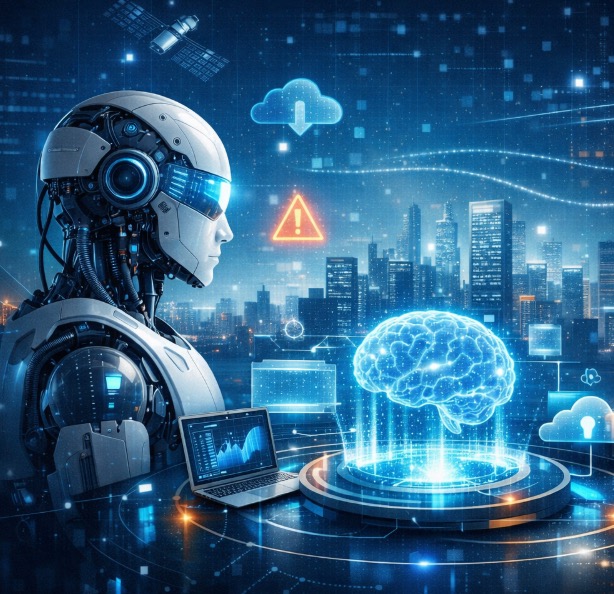
AIOps 2026 Conceptual Definition, Its Technological Meaning, and What the Transformation in IT Management Represents
In today’s increasingly digitalized business environment, the complexity of Information Technology (IT) operations has grown dramatically. Hybrid cloud architectures, microservices-based applications, continuous deployment models, and large volumes of observability data have caused traditional IT operations approaches to fall short in meeting scalability, response time, and reliability requirements.
In this context, the discipline referred to as AI—artificial intelligence—has been developed by combining artificial intelligence, machine learning, and big data analytics techniques with IT operations in order to manage this complexity and transform IT processes.
What Does the Use of the Term “Custom AIOps” Mean?
The meaning of this term may vary depending on the context in which it is used. There is no single, standardized, and universally accepted definition. The most common possible meanings can be summarized as follows:
Educational and Academic Context
Some usages refer to AI-focused custom projects as well as advanced or individualized programs. In this sense, it refers to an artificial intelligence application topic that is specifically defined for an individual, institution, or project.
Internal Company Documents
Some companies use the term AIOps for:
• Custom workflows
• Organization-specific AI operations
• Customized automation projects
Use as an Academic Report, Thesis, or Project Title
In this context, it is generally used for innovative or experimental topics that fall outside standard topic lists and are specially approved by an advisor or institution.
What Is AIOps?
AIOps is an approach that automates IT operations by using artificial intelligence and machine learning. In short, AIOps analyzes system data, detects anomalies, predicts problems, and enables IT teams to make faster and more accurate decisions.
What Is AIOps Used For?
• Predicts system failures in advance
• Automatically analyzes metrics and event data
• Enables faster root cause identification
• Reduces operational workload and manual effort
In summary, it can be described as AI-powered intelligent IT operations management.
What Are the Benefits of AIOps?
• Detects issues early and prevents failures
• Shortens response times
• Reduces operational costs
• Increases system performance and continuity
Overall, it aims to make operations faster, smarter, and more efficient.
What Does Automated IT Operations Mean?
It refers to the execution of monitoring, analysis, intervention, and improvement processes of IT systems by software with no or minimal human intervention. In short, it means that IT operations become self-managing through automation.
Automated IT operations involve the use of software automation tools to monitor, manage, and optimize IT infrastructure such as servers, databases, applications, and cloud environments.
Core Components of Automated IT Operations
• Automated monitoring
• Root cause analysis
• Automated remediation and intervention
• Event and alarm management
• Performance and capacity optimization
Benefits
They aim to provide rapid solutions to issues without human intervention and reduce operational labor costs. Continuous monitoring and improvement ensure that system performance is constantly optimized. Accuracy is increased by reducing human error, which in turn improves operational reliability.
Example:
When a system failure occurs, automated alarms are triggered and corrective actions begin automatically, and repetitive maintenance tasks are carried out without manual effort.
What Do AIOps and MLOps Mean?
AIOps refers to the use of artificial intelligence and machine learning in the management of IT operations. The primary focus is on system failures and operational issues, with the goal of enabling smarter, automated, and uninterrupted operations.
MLOps
MLOps refers to the management of processes related to the development, monitoring, deployment, and updating of machine learning models. Its focus is on model performance, versioning, and ensuring reliable data pipelines.
The Evolution of AIOps Toward 2026
Toward 2026, the most significant evolution of AIOps will be the shift from reactive approaches to proactive and even autonomous operations. AI models will learn system behaviors and predict potential outages and performance deviations in advance. This will allow IT teams to resolve issues through pre-planned automation processes rather than real-time manual intervention. As a result, systems that require no human intervention will become increasingly widespread.
What Does Security Integration Mean?
The integration of AIOps with cybersecurity operations will become an inseparable part of IT processes by 2026. AI-powered systems will not only monitor performance anomalies but also observe potential attack vectors, enabling real-time threat analysis and automated response.
This integration will enable faster threat detection, prevention of attacks, and automated solution recommendations for security incidents, thereby reducing security risks in IT management.
The Role of AIOps in IT Management in 2026
By 2026, AIOps will go beyond being merely an automation tool and will represent a paradigm shift by becoming central to IT strategy. The key outcomes of this transformation can be summarized as follows:
• Increased proactive management
• Resource optimization
• Autonomous systems and integration with DevOps
• Security and operations integration
In short, these effects will reduce the routine operational burden on IT teams while enabling organizations to strengthen their digital transformation and competitive capabilities.