Multimodal Models Growing: AI Trends in 2025
The conversation around artificial intelligence has evolved rapidly in the past few years. What used to be a distant dream has now become a strategic necessity for organizations of all sizes. In 2025, we are witnessing a tipping point where AI is no longer the domain of tech giants alone. Companies are adopting AI across business functions, and executives are preparing to allocate serious budgets to AI initiatives. Surveys show that more than three quarters of organizations now use some form of AI, and business leaders are doubling their investments. This shift from hype to pragmatic adoption reflects a growing understanding that AI must deliver tangible business value.
The landscape is being reshaped by two important developments: the rise of
agentic AI and the proliferation of multimodal models. At the same time, industries are grappling with questions about return on investment, governance and ethics. To make sense of this moment, we will explore what agentic AI means, why multimodal models are significant and how organizations can prepare for the next wave of automation.
Agentic AI: More Than Just Automated Workflows
Many people still conflate AI agents with simple workflows, but the difference is fundamental. A workflow follows a predefined sequence of steps set by a programmer, while an AI agent is designed to understand its environment, choose its own actions and adapt to changing conditions. Think of an agent as a junior employee who can plan and improvise; a workflow is more like a script that runs the same way every time. By perceiving and deciding on its own, an agent can pursue a goal even if the path is unclear at the outset.
Organizations are experimenting with AI agents in tasks ranging from customer support to
software development. Tools like Devin, an AI software engineer, and Julius, an AI data analyst, demonstrate how agents can navigate complex problems by observing data, planning the next action, executing it and learning from feedback. These agents handle not just simple commands but entire projects, breaking down goals into manageable steps and adjusting when they encounter an obstacle. Such autonomy requires powerful underlying models and careful oversight, but the potential productivity gains are enormous.
The challenge is that agentic AI is still expensive to build and maintain. You need to assess whether a task’s complexity and unpredictability justify the investment. You also need a team that understands how to monitor the agent’s decisions and intervene when necessary. Despite these obstacles, interest is surging. Surveys indicate that only a minority of organizations have fully implemented agentic AI solutions, but a large share are piloting projects or planning to invest soon. Business leaders see agents as a way to handle repetitive tasks, support IT teams and enhance customer service.
Generative and Multimodal AI Are Going Mainstream
Agentic AI is closely tied to advances in generative models, which power the reasoning and language abilities agents rely on. Generative AI has moved beyond chatbots into enterprise applications such as document drafting, content creation and code generation. Adoption is climbing rapidly as executives realize that AI can improve customer satisfaction, efficiency and security. For example, enterprise suites now include AI assistants that summarize meetings, draft emails and analyze reports.
Multimodal models, meanwhile, can handle text, images, audio and video in a single system. New models combine these modalities to generate richer outputs, allowing businesses to automate document processing, product descriptions, video captioning and even supply chain monitoring. The ability to synthesize information across different media unlocks new possibilities in marketing, e‑commerce and
training. Instead of building separate systems for each data type, companies can rely on one model to understand and generate a wide range of content.
Another important trend is the move toward customized enterprise models. Instead of relying solely on public large language models, companies are building bespoke solutions tuned to their own data. By tailoring models to specific tasks, they hope to improve accuracy and control costs while safeguarding sensitive information. At the same time, open‑source frameworks are making it easier to experiment with generative AI without locking into a single vendor. This democratization of AI development means that even small firms can build sophisticated agents.
Use Cases: From Back‑Office Support to Customer Experience
The promise of agentic and multimodal AI comes to life in specific use cases. Consider a company that automates employee onboarding. Instead of manually guiding a new hire through hundreds of forms, an AI agent can handle routine paperwork, schedule training sessions and answer policy questions. This reduces administrative overhead and helps new employees become productive faster. Similarly, IT help desks can deploy agents to reset passwords, route tickets and monitor system health, freeing engineers to focus on complex issues.
In marketing and sales, agents can personalize communications and analyze customer data. For instance, an AI‑powered agent might track a customer’s browsing history on
our website and tailor product recommendations accordingly. Another agent could draft follow‑up emails and schedule calls. The platform
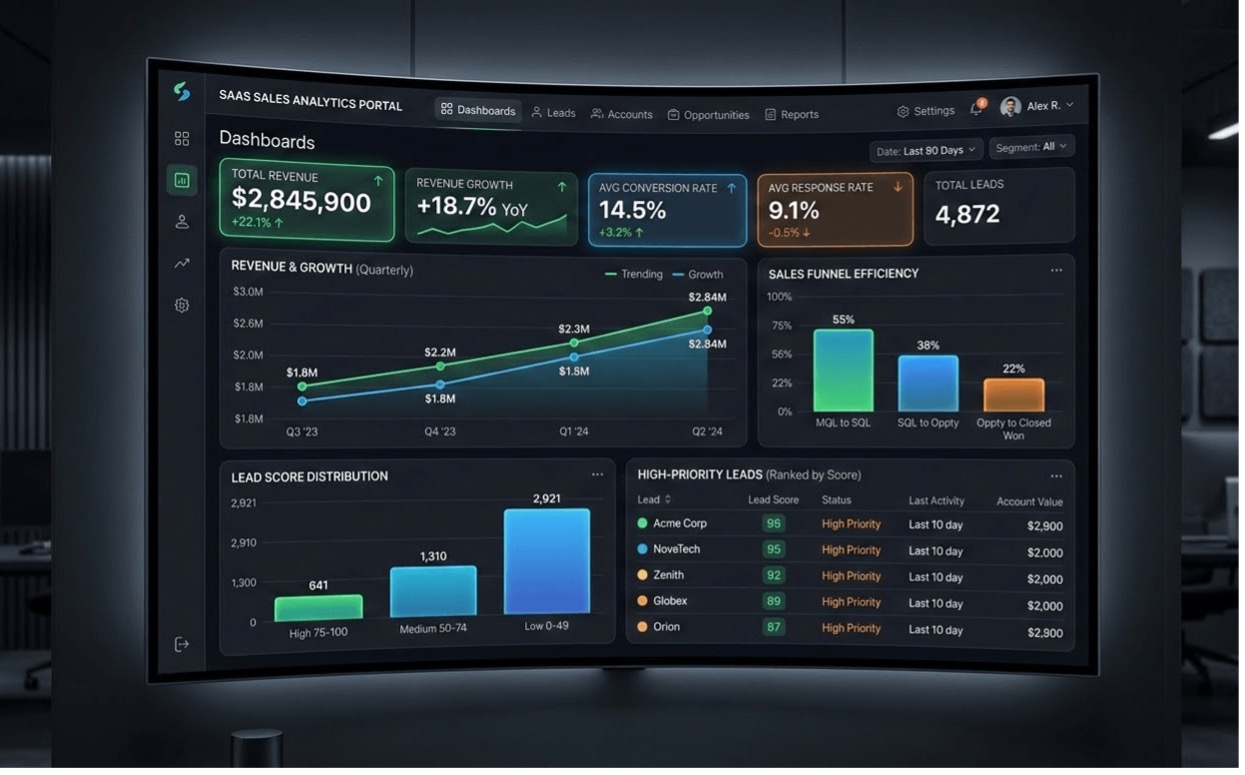
itsalesaas.com showcases how AI agents enhance lead generation by automating outreach, qualifying leads and handing them off to human sales reps at the right moment. These systems reduce wasted effort and boost conversion rates.
Project management also benefits. Agents can update task lists, allocate resources and highlight risks. They can provide real‑time
analytics, identifying patterns that human managers might miss. When paired with multimodal models, agents can review design documents, images or videos to ensure that a project remains on track.
Challenges and Governance
Despite the momentum, organizations face significant hurdles. Many leaders struggle to understand how agentic AI benefits their business. This uncertainty stems from a lack of clear frameworks and the complexity of deploying agents in highly regulated environments. Cybersecurity and data privacy concerns remain top barriers. Leaders worry about giving agents access to sensitive information without robust safeguards.
Another challenge is reliability. Current models sometimes hallucinate or produce incorrect output, and an agent acting autonomously could compound these errors. Large context windows and better memory management can reduce missteps, but they also increase computational costs. Human oversight is therefore crucial, and most experts agree that AI agents should augment, not replace, human decision‑makers.
Finally, there is the human factor. Employees need training to work alongside AI agents, and corporate culture must adapt. Surveys indicate that many organizations plan to offer additional training in the coming years. While some fear that AI will eliminate jobs, the emerging view is that agents will take over repetitive tasks, enabling teams to focus on creative and strategic work.
How to Prepare Your Organization
Adopting agentic and multimodal AI requires a thoughtful plan. Start by identifying pain points where automation could have the biggest impact. Low‑risk tasks like scheduling, data entry and frequently asked questions are good candidates for early pilots. Engage employees who will use the agents, and gather feedback to improve the system. Gradually scale up to more complex tasks, but always maintain checkpoints where a human can intervene. This incremental approach helps build trust and avoids the pitfalls of overpromising.
Invest in data quality and infrastructure. Agents learn from the data you provide, so errors or gaps will lead to poor outcomes. Work with legal and IT teams to establish robust security controls. Consider working with trusted
partners or open‑source frameworks that allow more flexibility. As you build expertise, you may decide to create an in‑house team focused on customizing and maintaining your AI models.
Most importantly, frame AI adoption around business goals. AI should not be a project for its own sake. Ask which processes you want to improve, what success looks like and how you will measure return on investment. Use the
lessons we learned about choosing software companies as a template for evaluating AI vendors and consultants. Look at their track record, ask about their security practices and demand transparent communication. Just as selecting the right software partner can make or break a project, choosing the right AI solution provider will determine whether your investment pays off.
The Road Ahead
All signs point to 2025 as a pivotal year. The cost of using advanced models is dropping, systems are becoming more efficient and researchers are optimizing them for reasoning and decision‑making. Governments and standards bodies are racing to draft regulations that balance innovation and protection. Meanwhile, early adopters are achieving measurable gains, inspiring others to follow. Surveys show that organizations that invest early are already seeing positive returns, and many plan to increase their spending.
As we move forward, expect AI agents to become more collaborative. Instead of single agents working alone, we will see networks of agents coordinating across departments. These systems will learn to delegate tasks, negotiate and even train each other. Multimodal capabilities will enable agents to understand and generate complex content, from technical diagrams to customer support calls. At the same time, ethical frameworks will guide how agents interact with humans and make decisions. Companies that invest in these capabilities now will be well positioned to stay ahead of the competition.
In summary, agentic AI and multimodal models mark the next stage of the AI revolution. They promise to transform business processes, unlock new forms of creativity and reshape the relationship between humans and machines. The opportunity is immense, but so are the responsibilities. By combining strategic planning, ethical considerations and a commitment to continuous learning, organizations can harness the full potential of AI and build a future where humans and intelligent agents work together to achieve more.
For more info, please reach out to us.
AI TRENDS IN 2025