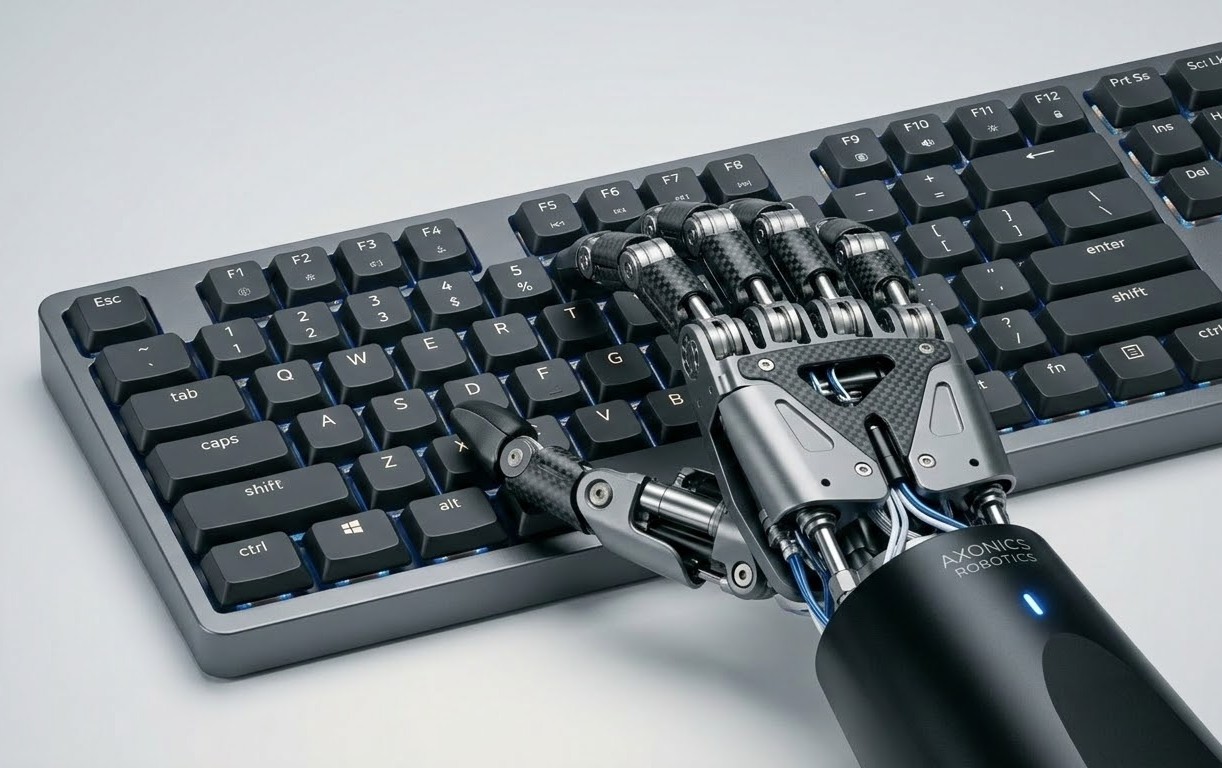

Quick answer: This month both OpenAI and Anthropic released AI tools that do a job for you instead of just answering questions. OpenAI's ChatGPT Work takes a brief, works in the background for minutes or hours, and hands back a finished file like a spreadsheet with real formulas or a formatted document. Anthropic's Claude Cowork sits on your own computer, reads and edits the files in folders you choose, and can run tasks on a schedule. Both are useful for a small business, but only if you point them at one clear job and keep a person on the decisions that matter.
For the last couple of years, using AI at work meant chatting. You typed a question, it typed an answer, and you did the actual work of copying that answer into a document, a sheet, or an email yourself. That is starting to change. In July 2026, both of the big AI companies shipped tools that skip the copy-paste and just do the task. OpenAI calls its version ChatGPT Work. Anthropic calls its version Claude Cowork. The idea behind both is the same: give the AI a goal and the tools to reach it, and let it work.
This is the part of the AI story that finally matters for an ordinary company. Not a bigger model or a higher benchmark score, but software that can take a boring, repeated task off someone's plate and give back a finished result. Here is what each one does, how they differ, and how to try one without betting the business on it.
The shift from chatting to doing
The word being used for this is agent. It sounds like jargon, so here is the plain version. A normal chatbot waits for you and replies. An agent is given a goal and a set of tools, your files, your inbox, a web browser, a spreadsheet, and it decides the steps itself and carries them out. You are not walking it through each move. You describe the outcome you want and it goes and produces it.
That difference is why these launches got attention. A chatbot saves you the thinking. An agent saves you the doing. For a small team where everyone already wears three hats, the doing is usually the bottleneck.
What ChatGPT Work does
ChatGPT Work is OpenAI's agent, and it shipped alongside the GPT-5.6 models. It lives in the cloud and connects to your apps. You brief it on a project, it works in the background for anywhere from a few minutes to a few hours, and it returns a finished file. In practice that means it can pull context from the apps and files you have connected, then produce a spreadsheet with working formulas, a formatted slide deck, a long document, or even a small working web app.
The strength here is that it can reach across the tools your business already uses and gather what it needs on its own. If your data lives in connected apps and the job is to turn that scattered information into one clean deliverable, this is the shape of task it was built for. It also comes with admin controls for business accounts, so a company can set which models, tools, and connectors staff are allowed to use. If you want the background on the models underneath it, we covered those in our guide to GPT-5.6 for business.
What Claude Cowork does
Claude Cowork takes a different angle. Instead of living in the cloud, it runs in the Claude desktop app on your Mac or Windows machine and works with the files that are already on your computer. You point it at a folder, and it can read, edit, create, and organise the files inside it. No uploading, no copy-paste, it acts on the real documents where they sit.
Two things make it interesting for a business. First, it can run tasks on a schedule you set, daily, weekly, or monthly, so a report that someone used to build by hand every Monday can just be waiting for them. Second, it uses plugins that bundle ready-made skills for specific roles. There are official plugins for sales, legal, marketing, finance, and more, so you are not starting from a blank page for common departmental work. If sorting, renaming, extracting data from, and generating local files is the tedious part of someone's week, this is aimed straight at it.
Which one fits your business
They overlap, but the simplest way to choose is by where your work lives.
Pick ChatGPT Work if your data is in the cloud
If the information you need is spread across connected web apps and the job is to pull it together into a polished output, ChatGPT Work fits. It is cloud-native, good at reaching across online tools, and strong when the task involves navigating the web or multiple services and returning a single finished file.
Pick Claude Cowork if your work is in local files
If your real work is folders of documents, spreadsheets, and PDFs on a computer, Cowork fits better. It is desktop-first and file-aware, so it shines at organising documents, pulling data out of them, and creating files without the friction of uploading everything first. The scheduled tasks also make it handy for anything recurring.
You do not have to marry one. Plenty of businesses will end up using ChatGPT Work for cloud-heavy jobs and Cowork for file-heavy ones. Picking the right tool for each task, rather than forcing everything through one, is the same discipline that keeps AI costs sane, which we wrote about in cutting enterprise AI costs in 2026.
Where this earns its keep for a smaller company
Skip the flashy demos. Here is where an agent actually saves time in an ordinary business.
- Recurring reports. The weekly sales summary or monthly numbers that someone rebuilds by hand can be assembled and formatted for you, ready to check instead of ready to start.
- Cleaning up data. Messy spreadsheets, inconsistent naming, information scattered across files. Pulling it into one tidy sheet is exactly the kind of tedious job an agent does well.
- First drafts. Proposals, standard replies, decks, and documents. The agent gets you an 80 percent version fast, and a person finishes it.
- Pulling data out of documents. Reading a folder of invoices, contracts, or forms and turning them into a structured list saves hours of manual entry.
- Research and summaries. Gathering information on a topic, a competitor, or a market and handing back a short, organised summary rather than twenty open tabs.
None of these hand the whole job to a machine. They take the repetitive setup and the first pass off a person, so the human time goes to checking, deciding, and the parts that need judgement.
The honest limits
An agent that acts on its own is more useful than a chatbot, and also easier to get wrong. A few things to keep in front of you.
It can still make mistakes, and now those mistakes land in real files and real outputs instead of just a chat window. That is why the businesses getting this right in 2026 share one habit: narrow scope with clear boundaries. They let the agent do the repetitive work and the first drafts, and keep a person on the decisions that matter. Give an agent one well-defined job with a person checking the result, and you get the time saving without the risk. Hand it everything and hope, and you will spend more time fixing its work than you saved.
Access is the other thing to think about before you start. An agent that can read your files and reach into your apps needs sensible limits on what it can touch, especially anything with customer data or money attached. Decide what it is allowed to see and change before you turn it loose, not after.
How to start without overcommitting
You do not need a big rollout. A sensible path:
- Pick the one job you dread. The most repetitive, time-draining task in your week is where to start. One clear job you can measure, not everything at once.
- Match the tool to the job. Cloud apps and web work point to ChatGPT Work. Local files and recurring reports point to Claude Cowork.
- Set the boundaries first. Decide which folders, apps, and data the agent can reach before it runs, and keep anything sensitive out of scope until you trust it.
- Keep a person checking the output. For the first weeks, review what it produces, find where it slips, and tighten the brief. This is where a real deployment gets good.
- Measure, then expand. Once one job works and the time saved is real, add the next. Slow and proven beats fast and messy.
The jump from chatting to doing is the real story of this month. The tools are ready enough that a small business can get value from them now, as long as you start narrow and stay in control.
Frequently asked questions
What is the difference between ChatGPT Work and Claude Cowork?
ChatGPT Work runs in the cloud and connects to your web apps, working in the background to return a finished file. Claude Cowork runs on your own computer and works directly with the files in folders you choose, and it can run tasks on a schedule. In short, ChatGPT Work is cloud-first and Cowork is desktop and file-first.
What is an AI agent?
An agent is AI that is given a goal and a set of tools, like your files, apps, or a web browser, and decides the steps to reach the goal on its own. A chatbot answers your question. An agent goes and does the task and hands back the result.
Are these safe to use with business data?
They can be, if you set limits first. Decide which folders, apps, and data the agent is allowed to touch before you run it, and keep sensitive information like customer records or payments out of scope until you have tested it and trust it. Business accounts also come with admin controls to manage access across a team.
Will an agent replace my staff?
No. It takes the repetitive setup and the first drafts off people so their time goes to checking, deciding, and the work that needs judgement. The businesses that succeed with it keep a person on the decisions that matter rather than handing everything to the machine.
Which one should a small business choose?
Match it to where your work lives. If your data is spread across cloud apps, ChatGPT Work fits. If your work is folders of documents and spreadsheets on a computer, Claude Cowork fits. Many companies will use both, one for cloud jobs and one for local files.
How much should I invest to start?
Start small. Pick one repetitive task, try one tool on it, and measure the time it saves before you spend on anything wider. Most small businesses should prove the value on a single job first, then expand only once the numbers hold.
Want help putting an agent to work?
Buinsoft is a Prague-based AI and software consultancy. We help companies pick one job worth automating, choose the right tool for it, set sensible limits on what the agent can reach, and keep a person in the loop where it counts, so the result saves time instead of creating cleanup work.
Write to us at info@buinsoft.com or use the contact form, and we will help you find the first task worth handing over.
Details current as of July 20, 2026. Agent features, pricing, and availability can change quickly, so check the current documentation from OpenAI and Anthropic before you build on them.